121 Alhambra Plaza, Suite 1500 Coral Gables, FL 33134
+1 (305) 489 1901
Our office hour: Mon - Fri
09.00am - 05.00pm
121 Alhambra Plaza, Suite 1500 Coral Gables, FL 33134
+1 (305) 489 1901
Our office hour: Mon - Fri
09.00am - 05.00pm
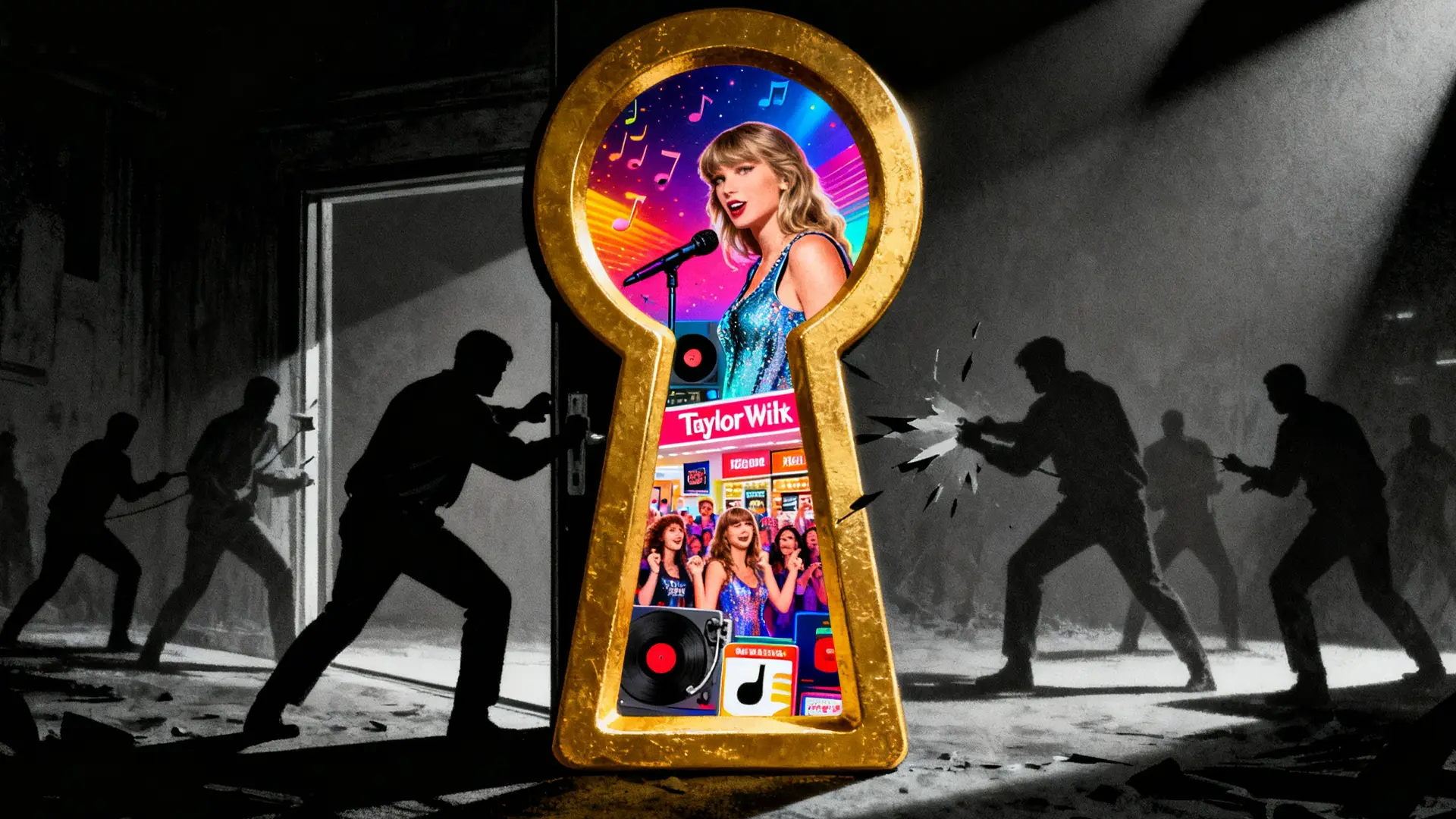
Taylor Swift’s recent trademark filings mark a notable shift in how celebrities are protecting their brands in the era of generative AI. Instead of focusing solely on names, lyrics, or logos, Swift is attempting to trademark something far more elusive: her voice.
Specifically, she has filed applications for short audio clips promoting her new album, along with an image of her performing on stage. While sound trademarks aren’t new, using them to protect a celebrity voice against AI imitation is largely uncharted territory.
And it raises a fundamental question: Can trademark law—built on “use in commerce”—really protect something as fluid as a human voice?
At its core, U.S. trademark law is grounded in a simple principle: rights come from use in commerce, not just registration.
To qualify for protection, a trademark must:
Swift’s filings appear carefully structured to meet this standard. The audio clips aren’t sound recordings—they’re commercial endorsements tied to specific platforms (Amazon Music and Spotify). That context matters.
By embedding her voice in a commercial message, she strengthens the argument that the sound functions as a source identifier, not just creative expression.
Historically, artists relied on copyright law to protect recordings. But AI has exposed a gap: you can now generate a new recording that sounds like Taylor Swift without copying any existing track.
That’s where trademark law becomes appealing.
Trademark infringement doesn’t require exact duplication. It hinges on whether something is “confusingly similar” to a protected mark. If Swift successfully registers these sound marks, she could potentially argue that AI-generated imitations of her voice create consumer confusion—especially in commercial contexts.
This is a significant shift. It moves the legal focus from copying content to misleading audiences.
Here’s where things get complicated.
Not every sound—or voice—qualifies as a trademark. To be protected, it must be:
Iconic examples like the NBC chimes or MGM lion roar meet this bar because they are:
Swift’s challenge will be proving that specific phrases in her voice function the same way.
And that brings us back to “use in commerce.” Filing an application is only the beginning. To maintain and enforce these rights, she must show:
Swift isn’t alone. Matthew McConaughey and other celebrities are exploring similar strategies, signaling what may become a broader trend: turning identity itself into trademarked property.
For businesses and creators, this has real implications.
If courts accept this approach, we may see:
Even if you’re not a global pop star, the underlying lesson is highly relevant:
Trademarks can include sounds, visuals, and other nontraditional elements—if they function as brand identifiers.
A clever idea or unique asset isn’t protectable unless it’s actively used in the marketplace.
Repetition and consistency are what turn a creative element into a legally protectable mark.
Keep clear records of how and where your mark appears in commerce. This is critical in any dispute.
Swift’s filings highlight a broader reality: the law is racing to catch up with technology.
Trademark law, with its emphasis on consumer perception and marketplace use, may become one of the most flexible tools available to combat AI-driven impersonation. But its success will depend on how courts interpret these new types of marks.
For now, one thing is clear: in a world where voices can be cloned and identities replicated, “use in commerce” is no longer just a legal technicality—it’s the foundation of digital identity protection.